Journal · Venue Guide
National Gallery of Ireland — a wedding among the masterpieces
Merrion Square, Dublin · Art Gallery Wedding Venue
The Venue
Marble floors, gilt frames, and light that only old galleries know how to hold.
The National Gallery of Ireland sits on Merrion Square, at the quiet end of Georgian Dublin, its rooms full of Caravaggios and Vermeers and the particular hush that great collections impose on the people inside them. It is not an obvious wedding venue. It is a better one than that.
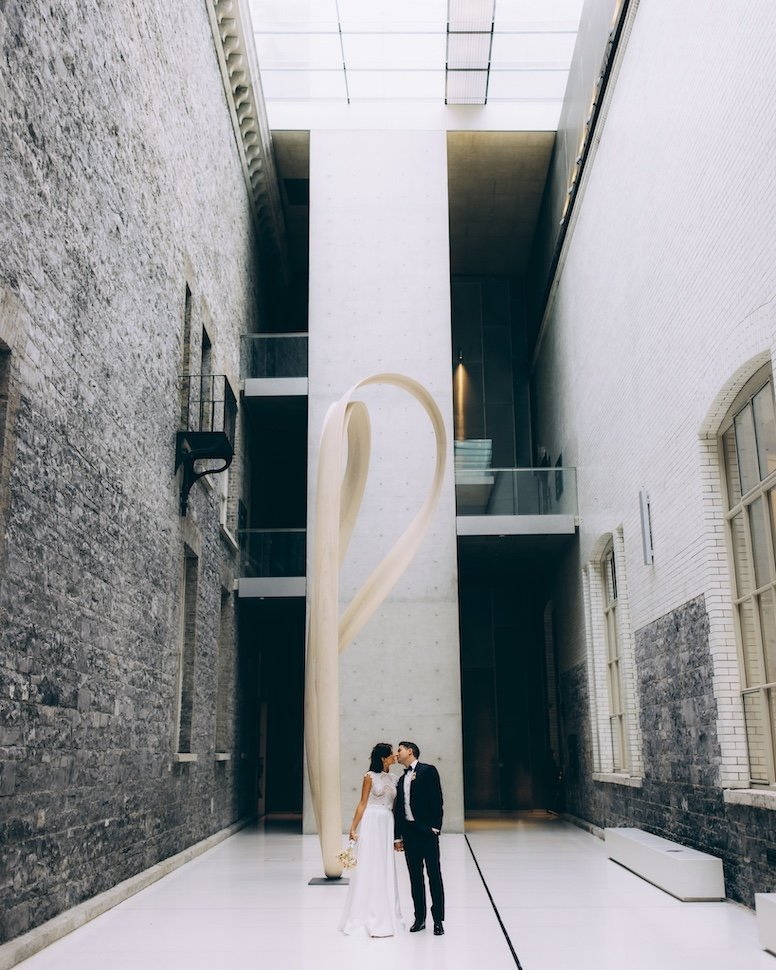
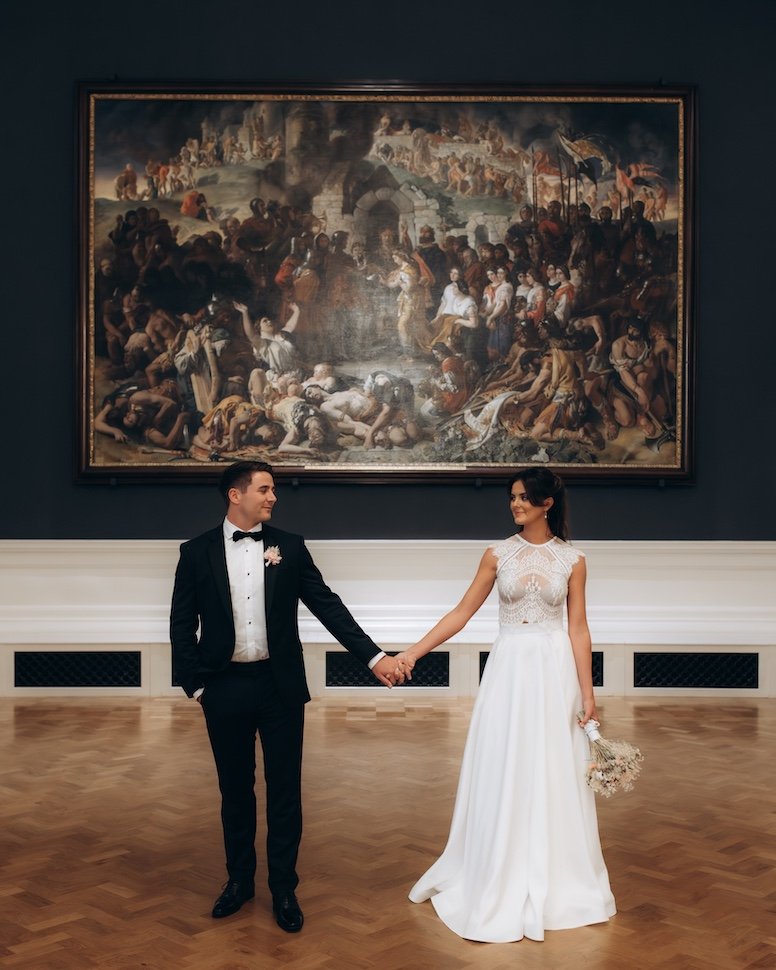
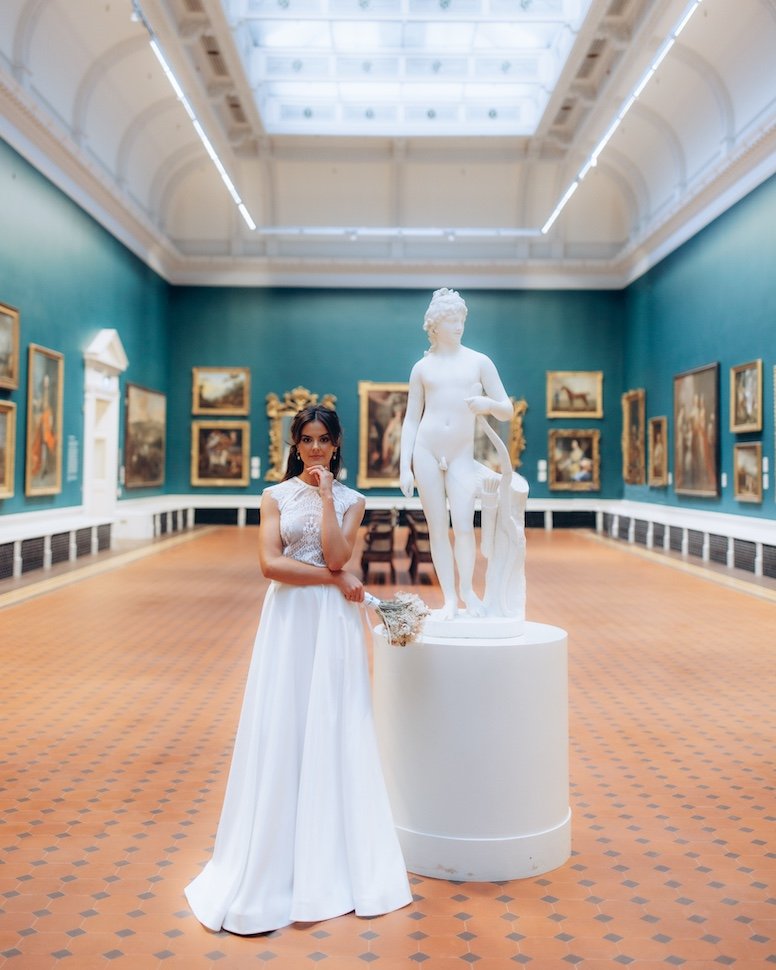
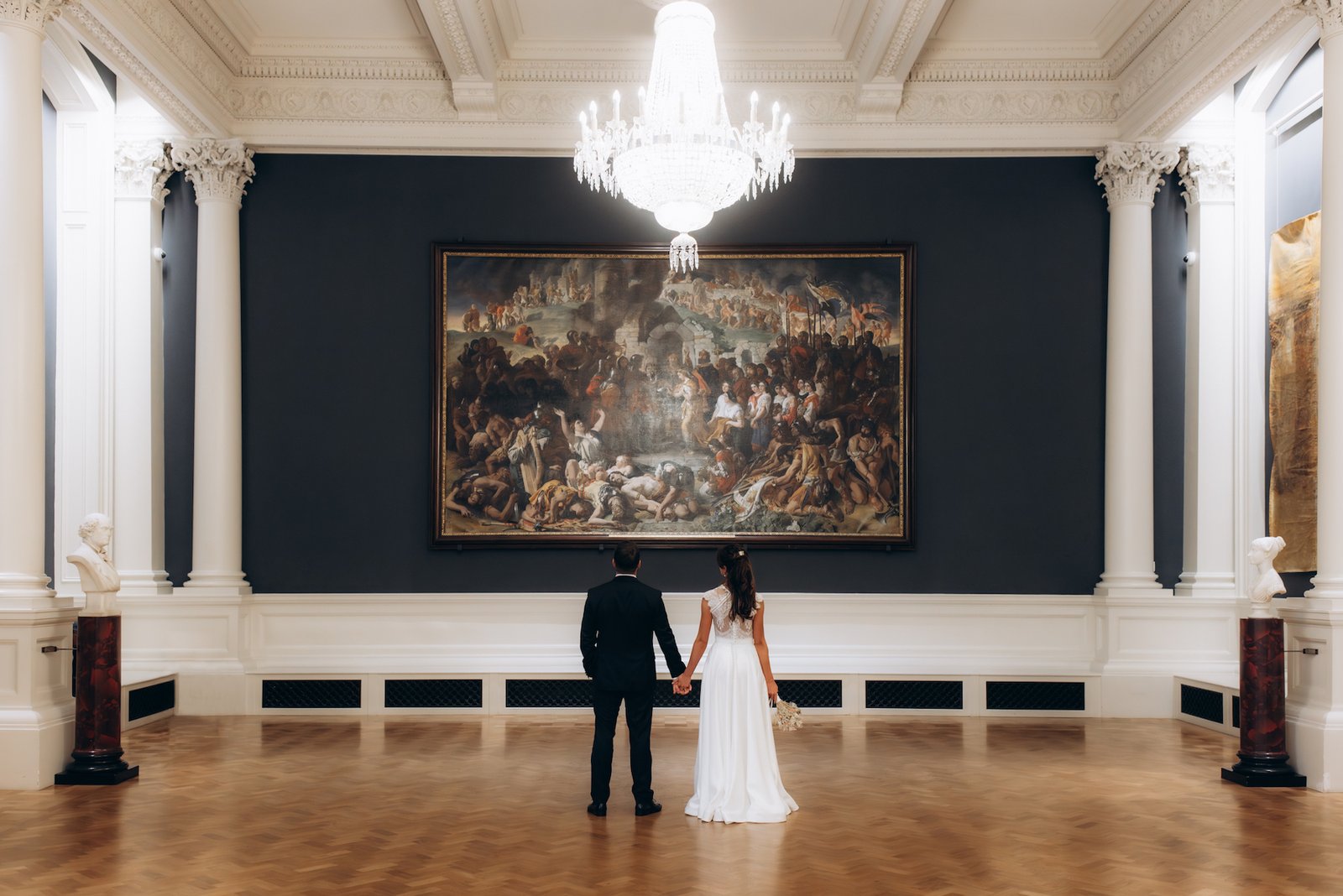
A wedding at the National Gallery asks something different of the photographer — and gives something different back. The light in those rooms is considered, directional, borrowed from centuries of painters who understood it better than anyone. The backgrounds are not arrangements but actual paintings, and the architecture — arched ceilings, stone floors, long corridors — gives every frame a sense of occasion that no hotel ballroom can approach.
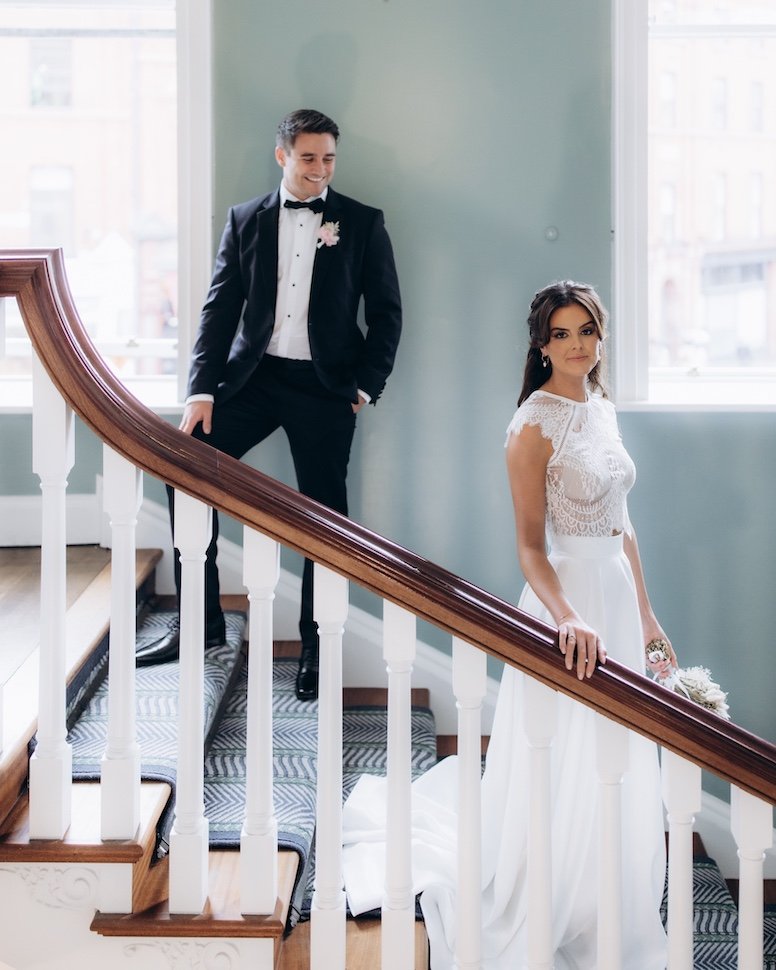
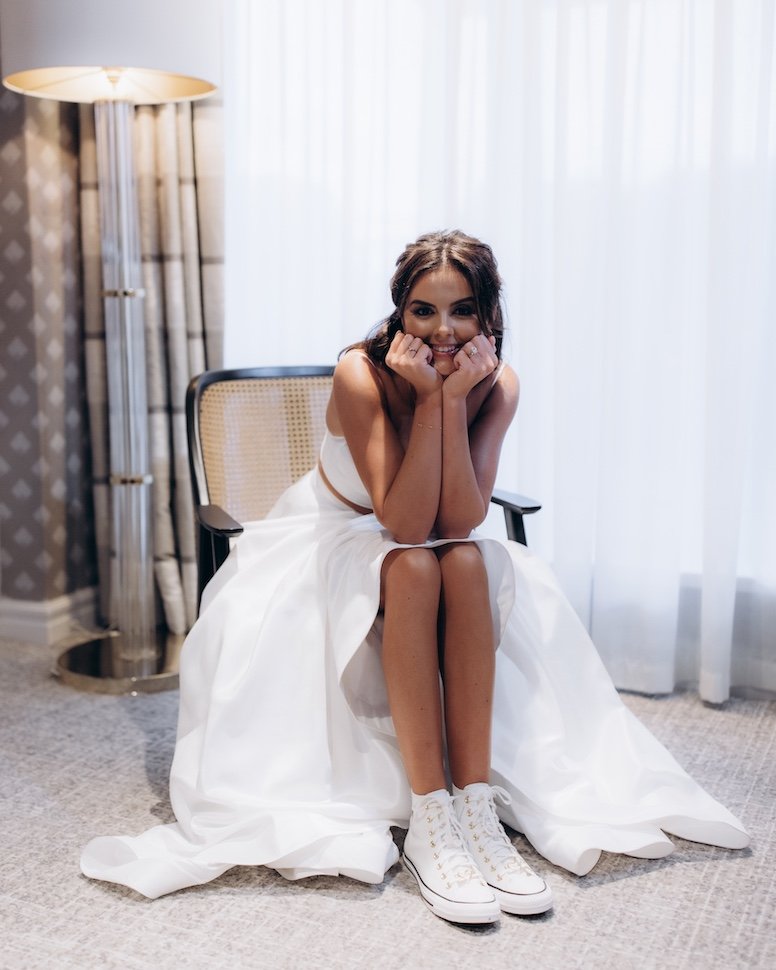
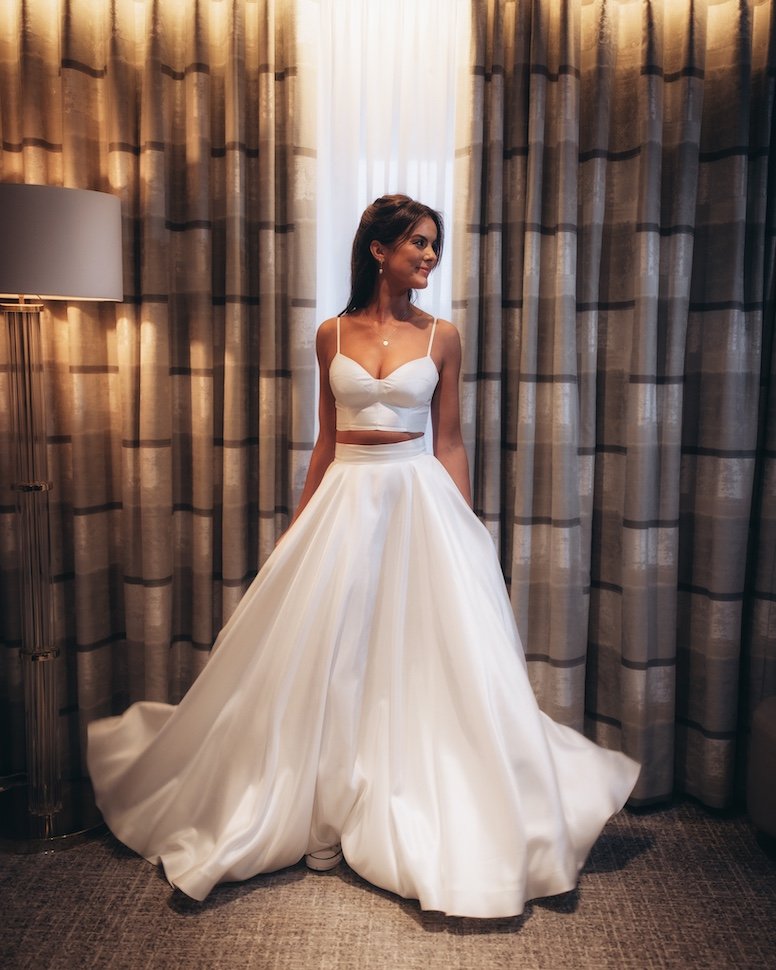
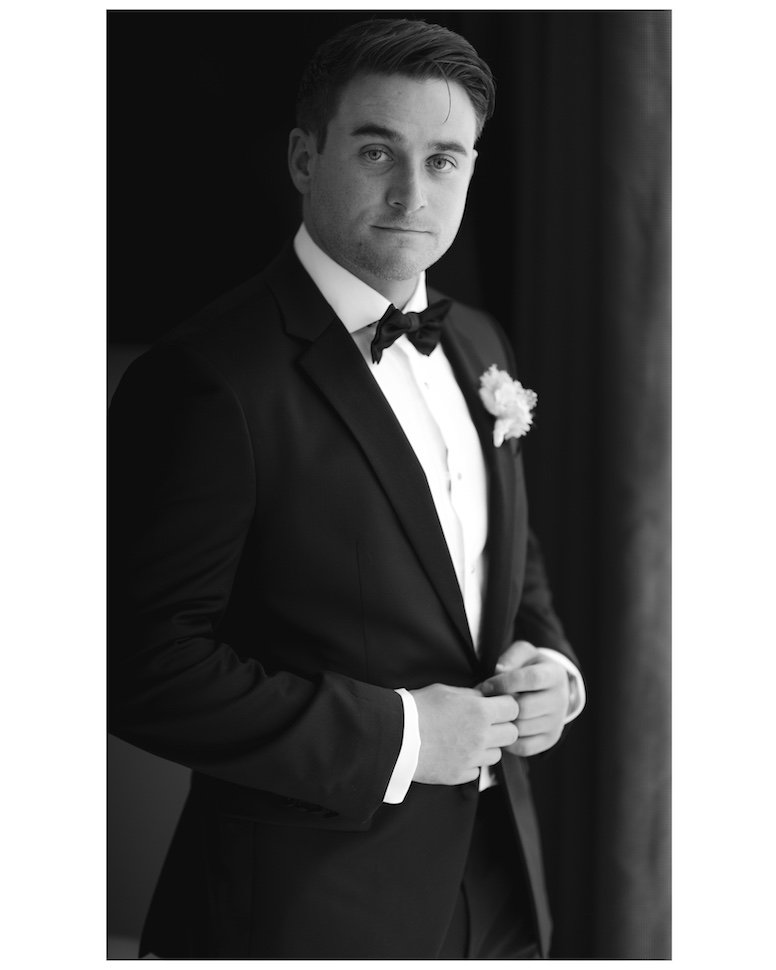
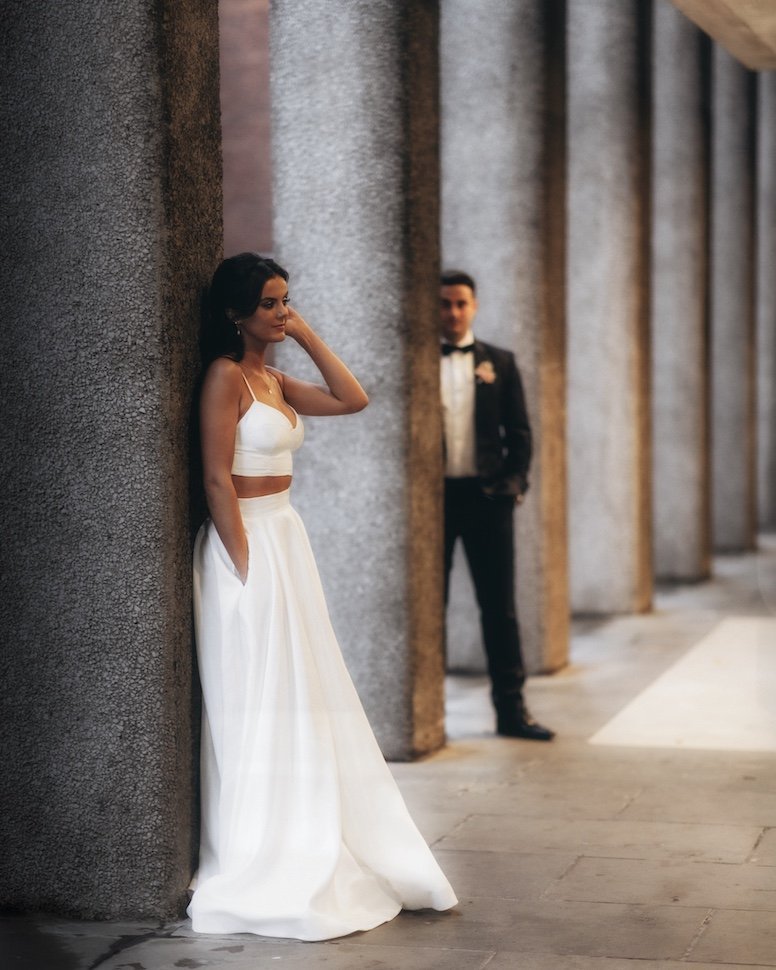
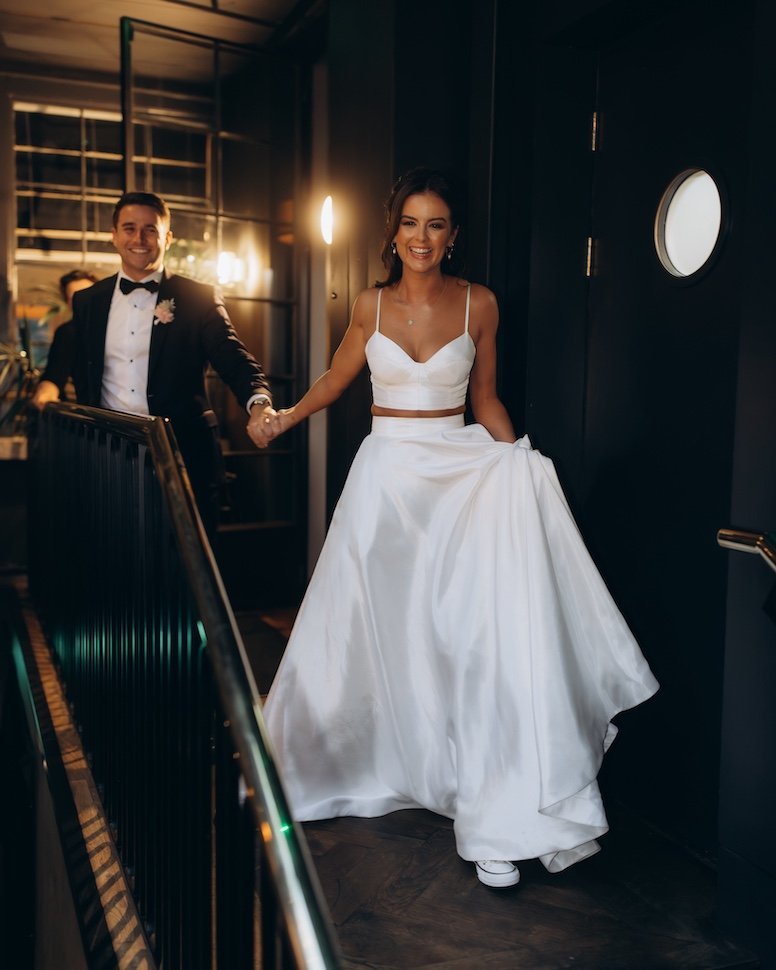
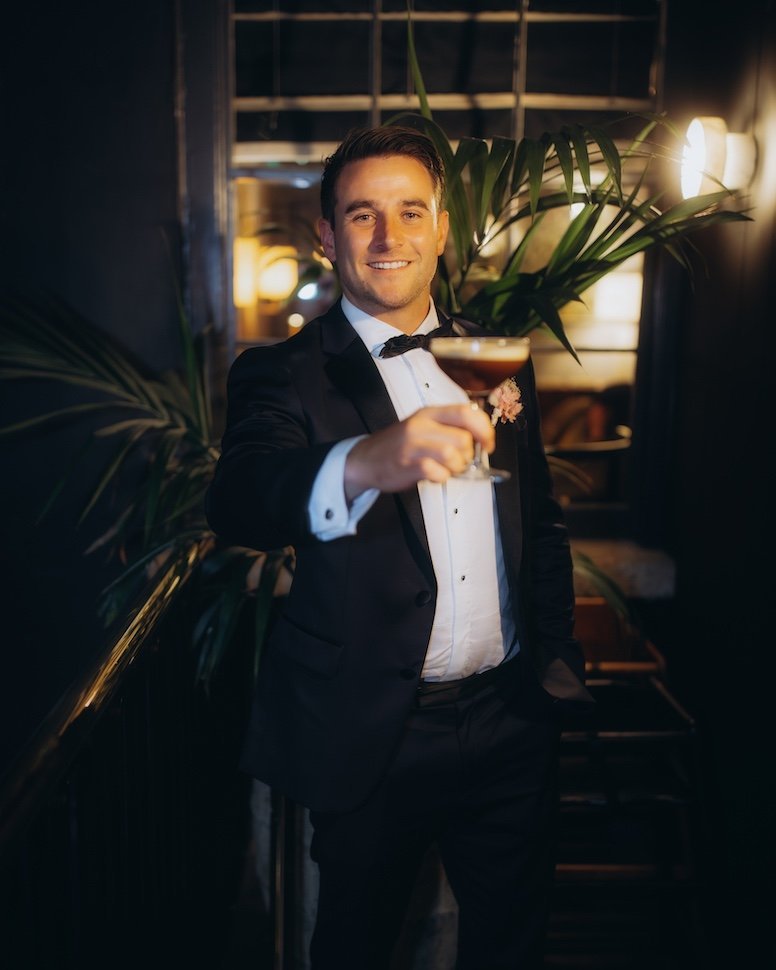
Eve and Connor said their vows here, surrounded by their closest people, with a Wicklow coast photoshoot to follow. Below is that day.
National Gallery of Ireland · Dublin
Ceremony & City Photoshoot
Dublin City Centre
What makes the National Gallery extraordinary for photography
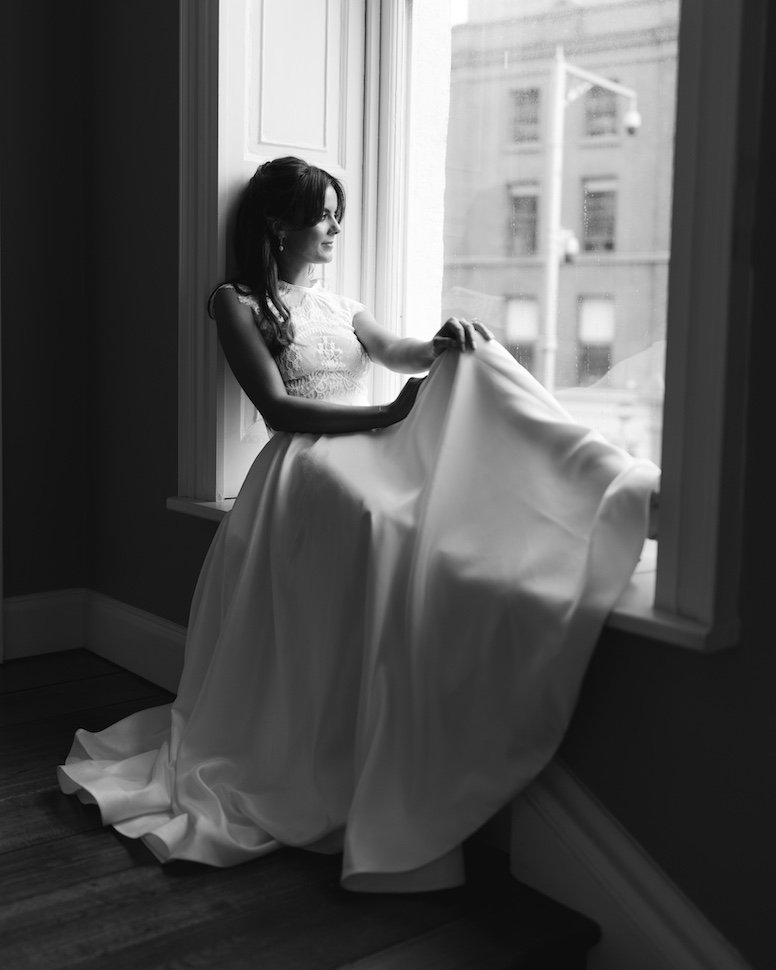
The light is the first thing. Gallery buildings are designed to make paintings look their best — which means the light is soft, even and comes from above, usually through large north-facing skylights or high windows that diffuse it beautifully. It is, in photographic terms, almost perfect: flattering on faces, dramatic enough to create depth, and consistent throughout the day. You do not need to chase the sun in a gallery.
The second thing is the layers. When you photograph a couple inside the National Gallery, you are working with a composition that already has four or five elements in it: the couple, the architecture, the art, the light, the other guests. There is always something interesting in the background and something happening in the foreground. The challenge is choosing which story to tell in each frame — and that, for a documentary photographer, is a very good problem to have.
The third thing, less spoken about, is what the space does to people. There is something about a gallery's inherent quietness — the instruction to look carefully, to take your time, to be present — that transfers to the people inside it on a wedding day. Guests are more attentive. The couple are more focused on each other. The ceremony, stripped of the usual stage-setting, becomes about the vows and nothing else. That produces extraordinary photographs.
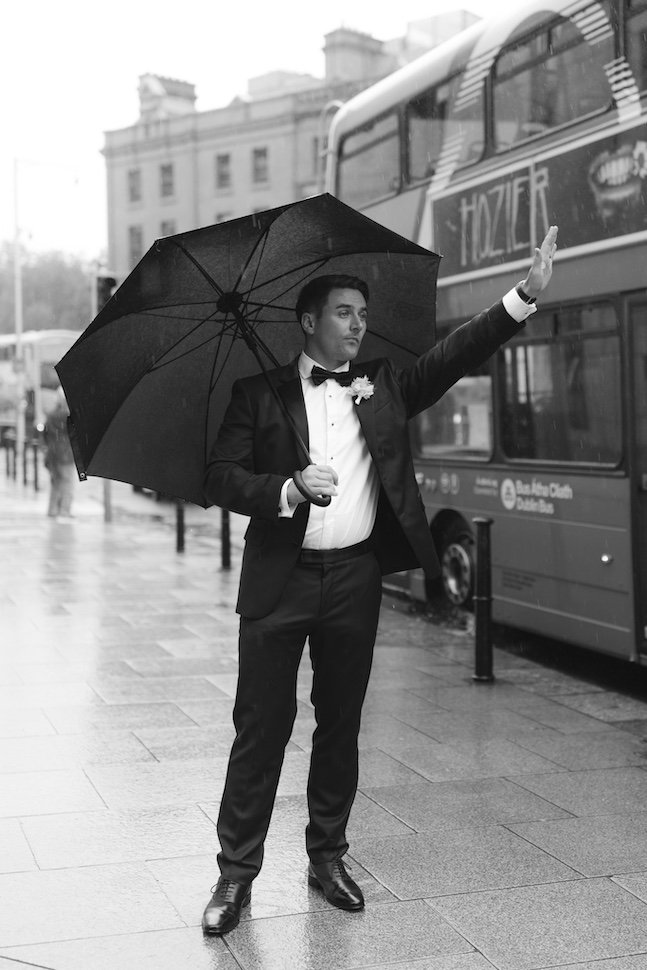
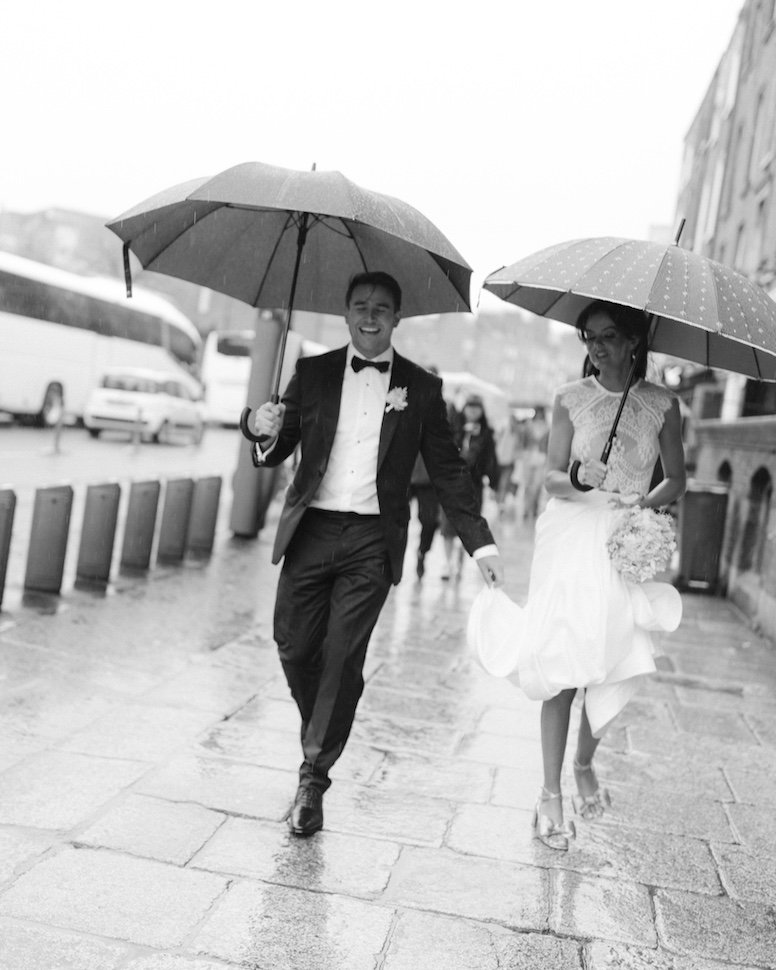
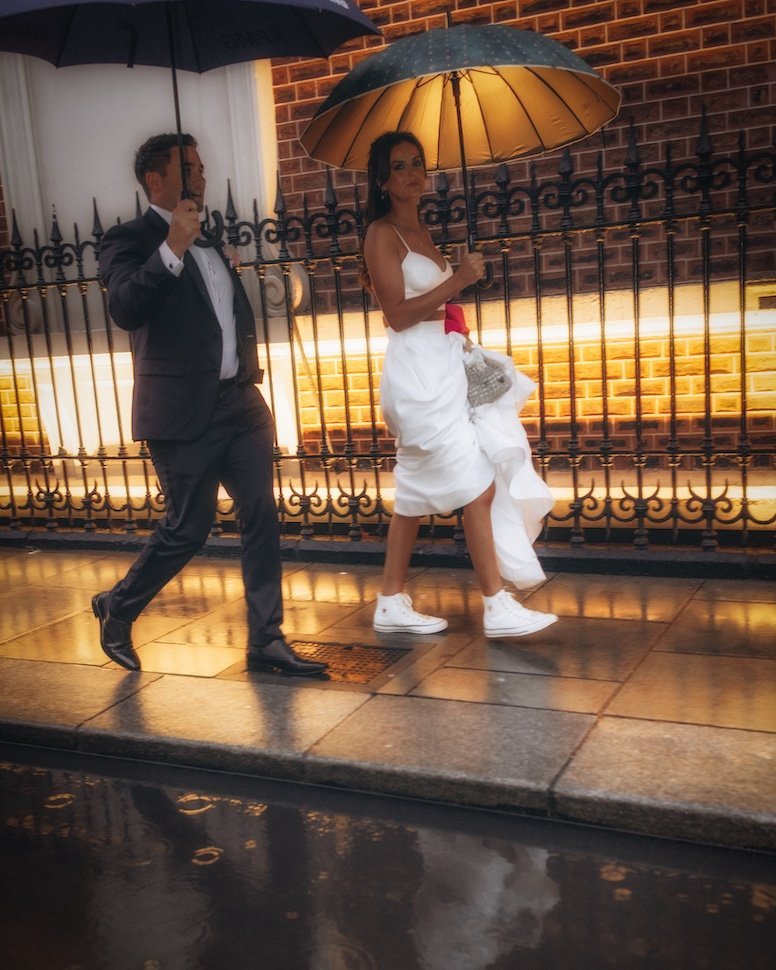
After the ceremony, the streets of Georgian Dublin — Merrion Square, the canal, the Georgian terraces of the south inner city — offer a photoshoot backdrop that is entirely unlike anything you find in the countryside. City light in the evening, particularly in summer, is long and golden and reflects off the pale Dublin brick in a way that is genuinely beautiful. A gallery ceremony followed by a Dublin city photoshoot is one of the most photogenic wedding days I have covered.
Planning a National Gallery wedding
The National Gallery hosts private events and wedding ceremonies through its venue hire team — it is worth getting in touch with them directly early in your planning, as availability in the gallery's rooms is limited and in demand. The Millennium Wing and the historic wings of the building offer different atmospheres: the Millennium Wing is contemporary and airy; the historic rooms carry the weight of the collection and the architecture. Both photograph extraordinarily well but differently.
For the photoshoot after the ceremony, I always recommend building time into the schedule for the streets immediately around the gallery — Merrion Square park, the Georgian terraces of Merrion Street, the canal at Baggot Street. In summer, the evening light on Dublin's south inner city is genuinely remarkable and runs late. In winter, the city lights and the early dark create a completely different, more cinematic atmosphere that is equally compelling.
A city wedding requires a slightly different approach from me as a photographer — more awareness of passers-by, traffic and timing, but also the freedom that comes from working without a fixed schedule in a space that rewards spontaneity. I have found that the best city wedding photographs come from the in-between moments: a doorway, a canal bridge, a quiet corner of the square that nobody else has noticed.